ICP Polyset AH-160 · Two-component adhesive
APOC Polyset AH-160 Review: how does this tile foam compare?
Compare AH-160 with RTA-1, TILE BOND and StormBond 2 across eight tile profiles, with Miami-Dade NOAs, homeowner guidance and M&M jobsite photos.
By M&M Roofing and Construction Corp · Florida Certified Roofing Contractor CCC1332459 · Published · Updated
Get a free tile roof estimate
Review your tile, waterproofing and attachment options together.
The short answer
AH-160 can be a good option for holding roof tiles in place when it matches your tile and the approved plan for your home. We have used it on M&M tile projects. What matters for you is that the attachment meets your roof’s wind requirements, the waterproofing underneath is done properly, and the estimate explains the materials and warranty. The comparisons below help you ask those questions—they don’t produce one winner for every roof.
Real M&M Roofing jobsite photos
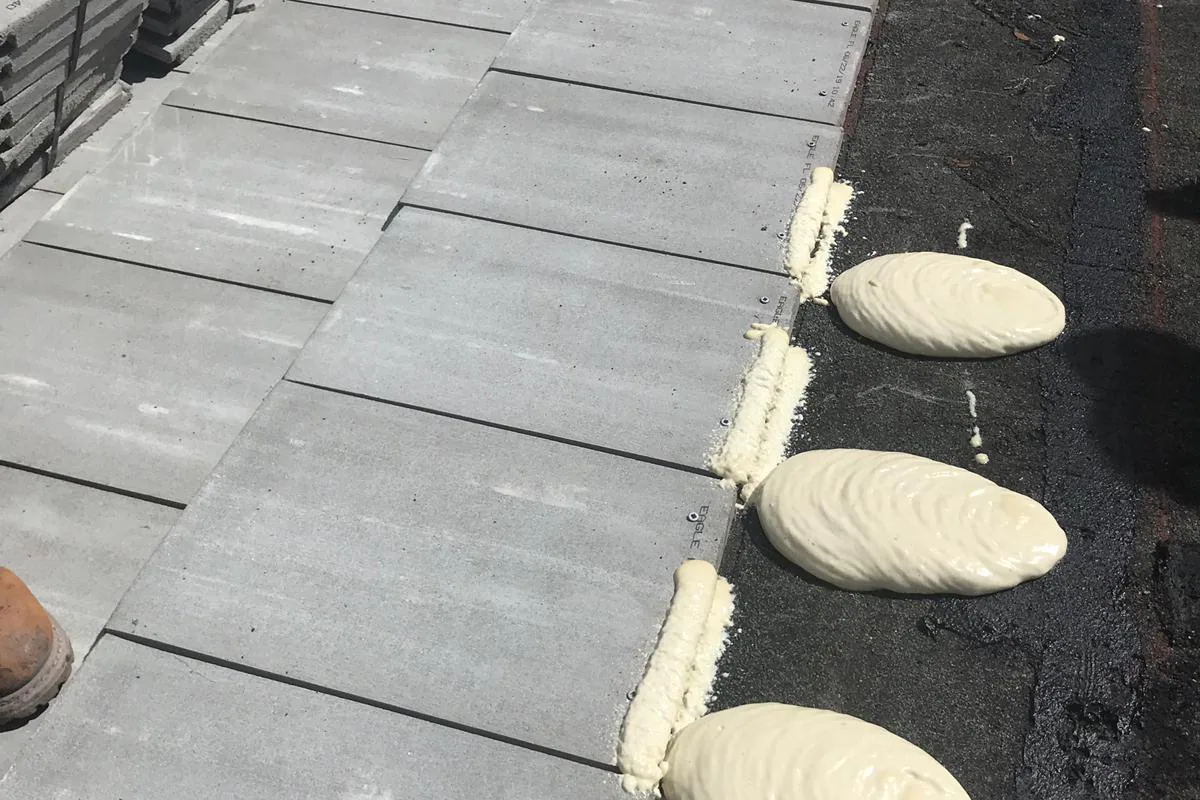
What foam attachment looks like before the tiles cover it
These photos show the adhesive placed beneath flat-profile tiles. Each placed amount is called a paddy. M&M confirms the photographed paddies are medium size, approximately 7 × 2 inches. Their dimensions show the scale of the work; the photos do not establish a foam weight, formulation or attachment rating.
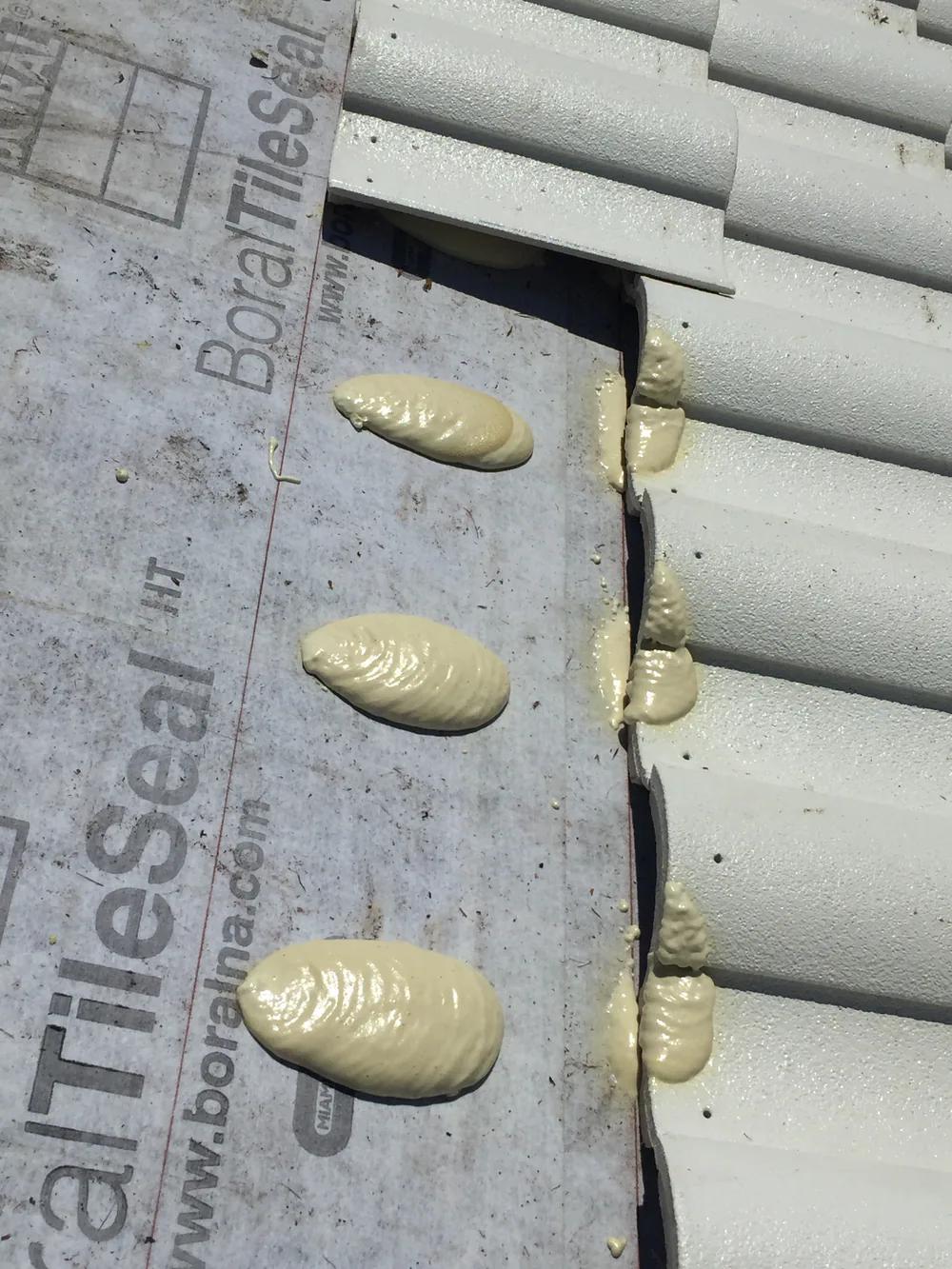
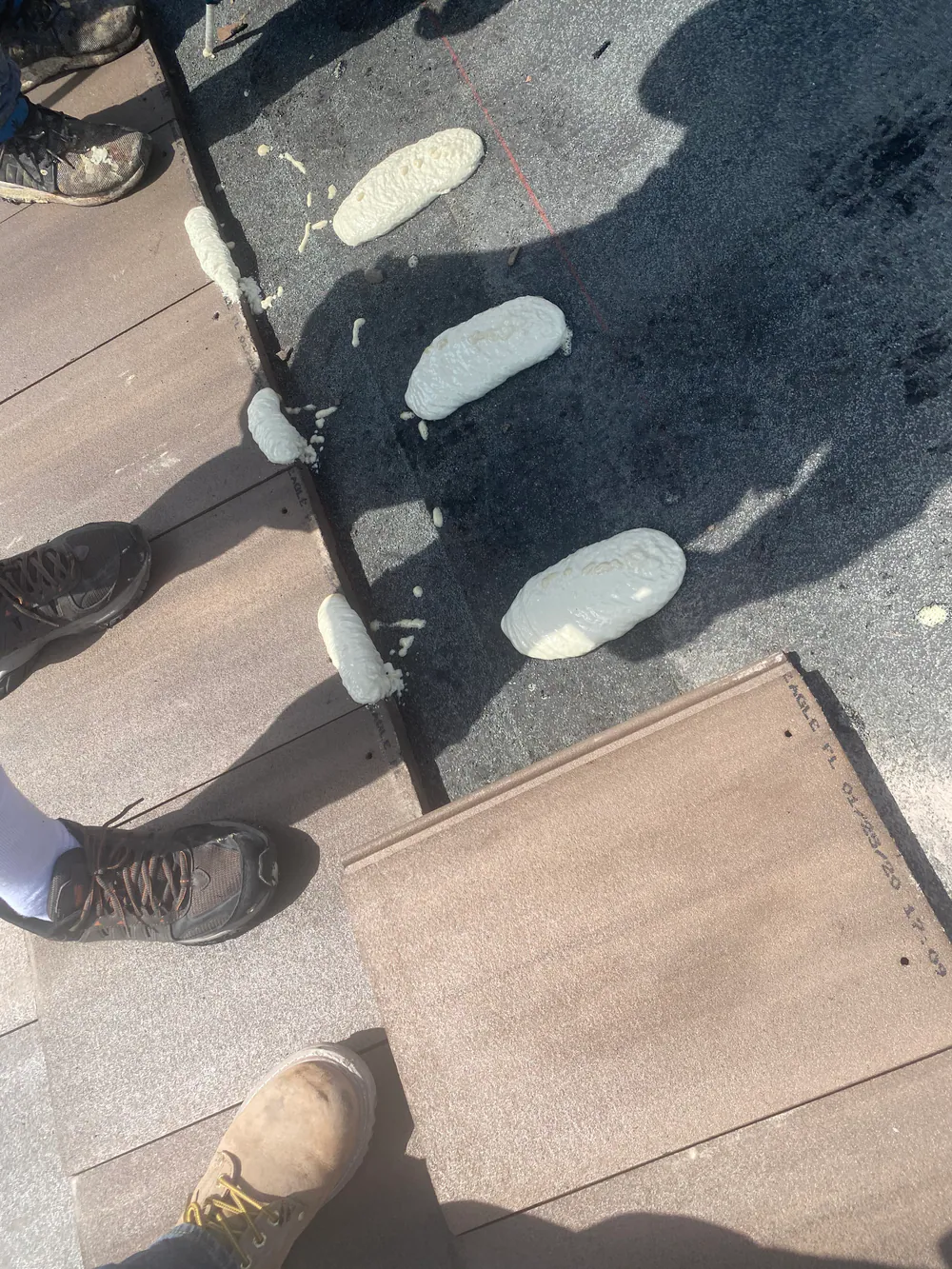
The foam holds the tile. The underlayment and flashing beneath and around it help keep water out. A complete tile roof estimate should explain both parts of the job.
What is AH-160, and what does its NOA tell you?
APOC Polyset AH-160 is ICP’s two-component polyurethane roof tile adhesive. The installer dispenses and mixes two parts. Its component approval names HFC, HFO1 and HFO2 formulations; those labels matter when matching the supplied product to a tile’s attachment detail.
Miami-Dade component approval
NOA 23-0614.01 (opens in a new tab)
- Approved
- September 19, 2024
- Stated expiration
- May 10, 2027
- Also needed
- Matching tile approval & roof design
The component document describes the adhesive. The tile’s NOA provides the attachment values for that tile. The roof designer checks the selected arrangement against the demands on your home. Recheck current approvals when the project is specified.
Official APOC product information (opens in a new tab) · How to check a roofing approval
The other foams in this comparison
One-component foam
APOC Polyset RTA-1
A separate APOC product with its own NOA and placement requirements.

One-component foam
DuPont TILE BOND
Its independent and interdependent attachment patterns have different details.

Two-component foam
DAP StormBond 2
The graphs use StormBond 2. One-component StormBond is a separate product.
Eight tile profiles · Four adhesive choices
How does AH-160 compare on your tile?
Choose a Westlake, Crown or Verea tile to see the published values for AH-160, RTA-1, TILE BOND and StormBond 2. These numbers describe resistance to that tile lifting and rotating with the named foam pattern. A higher bar is a higher value for that specific arrangement.
The measurement is an attachment-resistance moment, called Mf, in ft-lbf. It is not a wind-speed rating, a pull-off force or a direct test of how strongly the foam sticks to Polystick TU MAX. The foam amounts and contact patterns differ between entries.
A detail to resolve before choosing RTA-1
Some RTA-1 foam amounts and contact areas in the tile approvals differ from its current component approval, which also has differences between its table and drawings. The graph shows the published tile values. ICP and the roof designer need to reconcile the applicable details before using them for a project.
RTA-1 component NOA · Table 1 and drawings, pages 4–7 (opens in a new tab)
Compare the same tile
How do the attachment choices compare?
Choose a tile to see its published attachment values. A higher number means more listed resistance to that tile lifting and rotating in the named arrangement. Foam amounts and patterns can differ, so these are not equal-dose tests or a universal brand ranking.
Westlake · Flat concrete
Saxony 900 Slate
Tile NOA 24-1008.12 · page 6 · Table 5 (opens in a new tab)
Lake Wales, FL production covered by this tile NOA. The RTA-1 number is a published tile-table result. Its foam amount or contact detail needs reconciliation with the current component approval before project use.
Listed attachment resistance · Mf · ft-lbf
All bars start at zero. The scale stays from zero to 140 foot-pounds when changing tiles.
APOC Polyset RTA-1 · HFO
Two paddies: 12 g underlayment + 10 g headlap
41 ft-lbfSource entry · page 6 · Table 5 (opens in a new tab)
Mass and contact minimums align with the flat HFO drawing; tile row says 1 x 10 inch headlap while component drawing says 1 x 8 inch bead and minimum 10 in2 contact. Component Table 1 versus drawing conflict still needs resolution.
APOC Polyset AH-160 · HFC / HFO1
Single paddy: 45 g
119 ft-lbfDuPont TILE BOND
Independent · two paddies: 25 g each
65 ft-lbfSource entry · page 6 · Table 5 (opens in a new tab)
The tile table names TILE BOND without a separate HFO designation. Confirm the supplied formulation.
DAP StormBond 2
Two paddies: 8 g each
109 ft-lbf
View all tile values and sources in a table
| Tile | Adhesive | Mf · ft-lbf | Pattern and source |
|---|---|---|---|
| Westlake Saxony 900 SlateFlat concrete | APOC Polyset RTA-1 · HFO | 41 | Two paddies: 12 g underlayment + 10 g headlap Source · page 6 · Table 5 (opens in a new tab) Mass and contact minimums align with the flat HFO drawing; tile row says 1 x 10 inch headlap while component drawing says 1 x 8 inch bead and minimum 10 in2 contact. Component Table 1 versus drawing conflict still needs resolution. |
| Westlake Saxony 900 SlateFlat concrete | APOC Polyset AH-160 · HFC / HFO1 | 119 | Single paddy: 45 g |
| Westlake Saxony 900 SlateFlat concrete | DuPont TILE BOND | 65 | Independent · two paddies: 25 g each Source · page 6 · Table 5 (opens in a new tab) The tile table names TILE BOND without a separate HFO designation. Confirm the supplied formulation. |
| Westlake Saxony 900 SlateFlat concrete | DAP StormBond 2 | 109 | Two paddies: 8 g each |
| Crown Windsor SlateFlat concrete | APOC Polyset RTA-1 · HFO | 38 | Two paddies, 11 g each Source · page 7 · Table 5 (opens in a new tab) Tile row specifies 11 g each; component flat HFO drawing specifies 12 g underlayment and 10 g headlap. Contact is unspecified in tile table. Reconcile quantities and contact before installation. |
| Crown Windsor SlateFlat concrete | APOC Polyset AH-160 · HFC / HFO1 | 119 | Single paddy: 45 g |
| Crown Windsor SlateFlat concrete | DuPont TILE BOND | 65 | Independent · two paddies: 25 g each Source · page 7 · Table 5 (opens in a new tab) The tile table names TILE BOND without a separate HFO designation. Confirm the supplied formulation. |
| Crown Windsor SlateFlat concrete | DAP StormBond 2 | 122 | Two paddies: 8 g each |
| Westlake Villa 900Medium-profile concrete | APOC Polyset RTA-1 · HFO | 71 | Two paddies: 12 g underlayment + 10 g headlap Source · page 6 · Table 5 (opens in a new tab) Tile row headlap contact is 8 in2; component medium HFO drawing requires at least 10 in2. Mass matches the drawing, but contact detail needs reconciliation. |
| Westlake Villa 900Medium-profile concrete | APOC Polyset AH-160 · HFC / HFO1 | 87 | Single paddy: 54 g |
| Westlake Villa 900Medium-profile concrete | DuPont TILE BOND | 67 | Independent · two paddies: 25 g each Source · page 6 · Table 5 (opens in a new tab) The tile table names TILE BOND without a separate HFO designation. Confirm the supplied formulation. |
| Westlake Villa 900Medium-profile concrete | DAP StormBond 2 | 55 | Two paddies: 8 g each |
| Crown TuscanyMedium-profile concrete | APOC Polyset RTA-1 · HFO | 44.6 | Two paddies: 12 g underlayment + 10 g headlap Source · page 6 · Table 6 (opens in a new tab) Tile row headlap contact is 8 in2; component medium HFO drawing requires at least 10 in2. Mass matches the drawing, but contact detail needs reconciliation. |
| Crown TuscanyMedium-profile concrete | APOC Polyset AH-160 · HFC / HFO1 | 87 | Single paddy: 54 g |
| Crown TuscanyMedium-profile concrete | DuPont TILE BOND | 67 | Independent · two paddies: 25 g each Source · page 6 · Table 6 (opens in a new tab) The tile table names TILE BOND without a separate HFO designation. Confirm the supplied formulation. |
| Crown TuscanyMedium-profile concrete | DAP StormBond 2 | 108 | Two paddies: 8 g each |
| Westlake Barcelona 900High-profile concrete | APOC Polyset RTA-1 · HFO | 44 | Two paddies: 12 g underlayment + 12 g headlap Source · page 6 · Table 5 (opens in a new tab) Tile row headlap contact is 10 in2; component high HFO drawing requires at least 18 in2. Mass matches the drawing, but contact detail needs reconciliation. |
| Westlake Barcelona 900High-profile concrete | APOC Polyset AH-160 · HFC / HFO1 | 67 | Single paddy: 63 g |
| Westlake Barcelona 900High-profile concrete | DuPont TILE BOND | 58 | Independent · two paddies: 12.5 g each Source · page 6 · Table 5 (opens in a new tab) The tile table names TILE BOND without a separate HFO designation. Confirm the supplied formulation. |
| Westlake Barcelona 900High-profile concrete | DAP StormBond 2 | 66 | Two paddies: 8 g each |
| Crown SanibelHigh-profile concrete | APOC Polyset RTA-1 · HFO | 53.5 | Two paddies: 22 g underlayment + 11 g headlap Source · page 5 · Table 5 (opens in a new tab) Tile row has 22 g underlayment and 11 g headlap; component high HFO drawing specifies 12 g each. Headlap mass is below that drawing; tile contact is unspecified. Needs reconciliation. |
| Crown SanibelHigh-profile concrete | APOC Polyset AH-160 · HFC / HFO1 | 67 | Single paddy: 63 g |
| Crown SanibelHigh-profile concrete | DuPont TILE BOND | 58 | Independent · two paddies: 12.5 g each Source · page 5 · Table 5 (opens in a new tab) The tile table names TILE BOND without a separate HFO designation. Confirm the supplied formulation. |
| Crown SanibelHigh-profile concrete | DAP StormBond 2 | 101 | Two paddies: 8 g each |
| Verea Spanish S · Grade 1One-piece clay | APOC Polyset RTA-1 · HFO | Unavailable | No entry in the reviewed tile approval Source · page 5 · Tables 6–7 (opens in a new tab) No approval or performance value for this pairing is inferred from another tile. |
| Verea Spanish S · Grade 1One-piece clay | APOC Polyset AH-160 · HFC / HFO1 | 63 | Single paddy: 34.6 g |
| Verea Spanish S · Grade 1One-piece clay | DuPont TILE BOND | 54 | Independent · two paddies: 27.5 g each Source · page 5 · Table 6 (opens in a new tab) The tile table names TILE BOND without a separate HFO designation. Confirm the supplied formulation. |
| Verea Spanish S · Grade 1One-piece clay | DAP StormBond 2 | 83 | Two paddies: 9.7 g each |
| Verea True Barrel · Grade 1Two-piece clay | APOC Polyset RTA-1 · HFO | Unavailable | No entry in the reviewed tile approval Source · page 5 · Table 6 (opens in a new tab) No approval or performance value for this pairing is inferred from another tile. |
| Verea True Barrel · Grade 1Two-piece clay | ICP Polyset AH-160 · legacy HFC | 118.31 | 34.6 g per pan; 17.3 g on each side of cap Source · page 5 · Table 6 (opens in a new tab) Legacy Polyset AH-160 entry; not an HFO1 or HFO2 result. Table 6, footnote 3. |
| Verea True Barrel · Grade 1Two-piece clay | DuPont TILE BOND | 89.8 | 12.5 g per pan; 12.5 g on each side of cap Source · page 5 · Table 6 (opens in a new tab) The tile table names TILE BOND without a separate HFO designation. Confirm the supplied formulation. Table 6, footnote 4. |
| Verea True Barrel · Grade 1Two-piece clay | DAP StormBond 2 | Unavailable | No entry in the reviewed tile approval Source · page 5 · Table 6 (opens in a new tab) No approval or performance value for this pairing is inferred from another tile. |
How we selected the numbers and formulations
All tiles use a fixed 0–140 scale and the same four products. We selected RTA-1 HFO two-paddy rows, AH-160 HFC/HFO1 single-paddy rows, TILE BOND independent rows and StormBond 2 two-paddy rows where available. These are selected published arrangements, not equal-dose tests or the highest possible result for every brand. The chart identifies each source’s manufacturing location.
The AH-160 comparison uses listed single-paddy amounts from 34.6 to 63 g. Smaller entries in some tile tables, including 24 g single paddies and 8 g two-paddy amounts, differ from the component minimums and are not used here. HFO2 is also separate: its tile-table contact areas need reconciliation with the component detail. The selected HFC/HFO1 numbers cannot be relabeled as HFO2.
Verea True Barrel uses a separate cap-and-pan system. Its AH-160 value of 118.31 retains the legacy HFC identity, with 34.6 g per pan and 17.3 g on each side of the cap. It is not an HFO1 or HFO2 result. RTA-1 is absent from both reviewed Verea tile approvals; StormBond 2 is absent from the reviewed True Barrel table. Missing entries remain unplotted.
AH-160 component installation requirements and details (opens in a new tab)
The same foam amount is another useful comparison
For Westlake Saxony 900 Slate from Lake Wales, the listed single 45 g entries are 119 ft-lbf for AH-160 HFC/HFO1 and 93 ft-lbf for StormBond 2. This narrower comparison keeps the tile and foam amount the same; placement and contact requirements still matter.
Published attachment values for the same tile
Choose an example. The printed weights identify entries in the tile approval; they are not jobsite dispensing instructions.
Two foams with the same Saxony 900 Slate tile
Listed attachment-resistance moment, Mf · ft-lbf · zero-based scale
StormBond 2 · two components
One 45 g paddy · tile-NOA table entry
APOC AH-160 · HFC / HFO1
One 45 g paddy · tile-NOA table entry
Lake Wales plant. Both rows specify one 45 g paddy. These are published tile-table entries, not dispensing instructions: contact area, location and each component approval still apply. AH-160’s value here belongs to HFC/HFO1, not HFO2. The roof’s required resistance must be checked separately.
The order can change with another tile or pattern. For Barcelona 900, the selected single-paddy entries are 67 ft-lbf for AH-160 at 63 g and 82 ft-lbf for StormBond 2 at 60 g. Those are different quantities. Barcelona NOA · page 7, Table 6 (opens in a new tab)
Ask your roofer: “Which exact attachment detail meets the requirements for my house?” That is more useful than choosing the tallest bar for a different tile.
Should your tiles use foam or screws?
Both can be part of an approved roof system. Foam can reduce fasteners through field tiles in a compatible installation. Screws, clips or other mechanical attachment may still be needed at edges, trim or other specified locations.
The decision depends on your tile, deck or battens, roof slope and wind requirements. Neither a foam brand nor a screw count alone tells you how the roof will perform. The estimate should identify the attachment method and the detail the crew will follow.
Visible fasteners in this M&M photo show why “foam-set” should not be read as “no fasteners anywhere.” The image itself does not establish what those fasteners support.
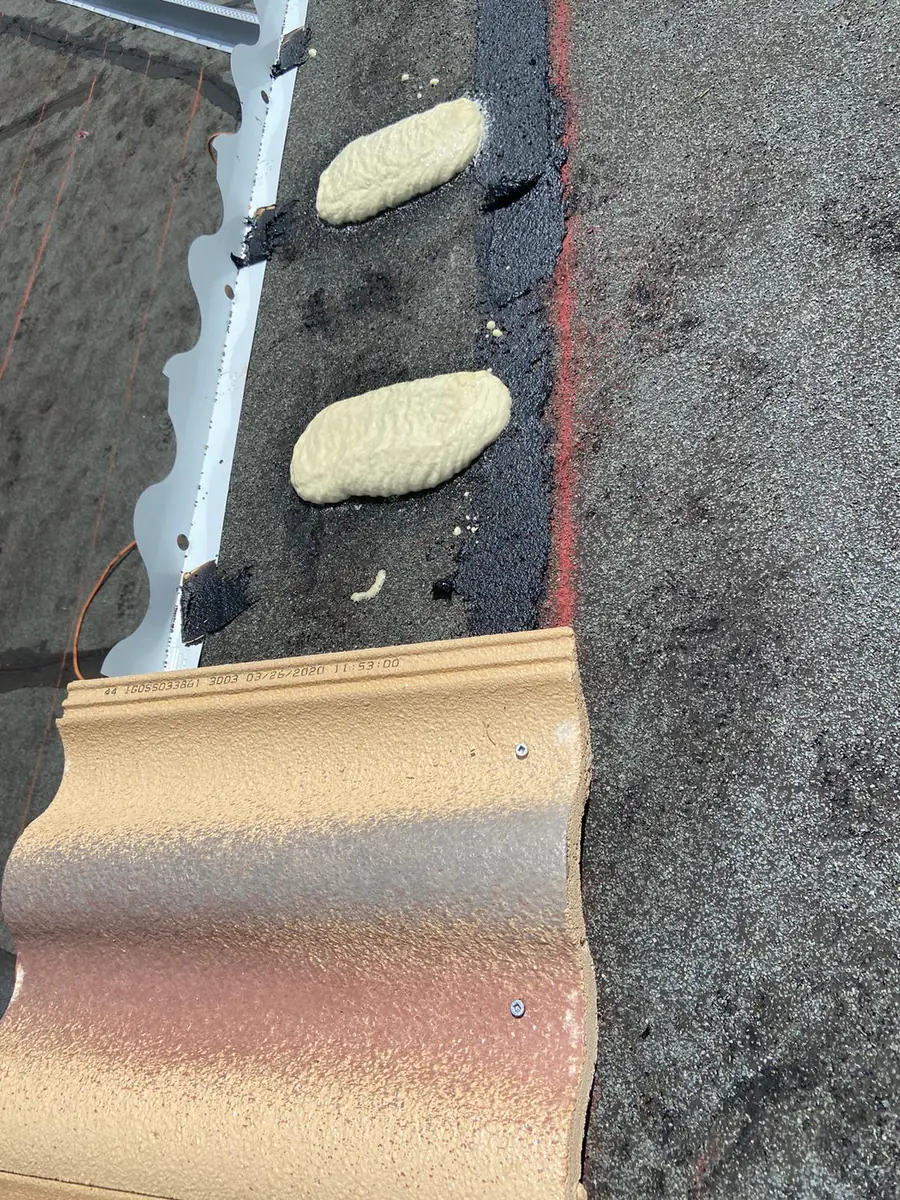
The waterproofing beneath the tile
Can AH-160 go over Polystick TU MAX?
Polyglass’s compatibility table expressly names APOC Polyset AH-160 HFC with Polystick TU MAX. That is the formulation established by the cited table.
The table does not separately name AH-160 HFO1 or HFO2. Have the exact supplied formulation and approved assembly confirmed before specifying either one. Compatibility does not supply a strength rating for the complete roof: the wood deck, underlayment attachment, tile, foam and roof design all matter.
Read our Polystick TU MAX review for the waterproofing side of the estimate. Ask how damaged decking, roof openings, valleys and flashing will be handled along with the tile work.
What makes the installation worth paying for?
A qualified crew following the right detail
AH-160’s approval requires a factory-trained, qualified applicator. Proper mixing, equipment checks, surface preparation and contact with the tile matter. A product name in the estimate does not replace that work.
Fresh foam and timely placement
The approval specifies placing tiles within a one- to two-minute window after dispensing. This is an installation requirement, not a full-cure time or a promise that the roof is ready for a storm.
A complete scope and written coverage
Compare tear-off, wood repairs, underlayment, flashing, tile and trim, attachment, permits, cleanup and workmanship coverage. Ask for the product warranty for the exact foam supplied and the contractor’s separate workmanship terms, including who handles a leak or loose tile.
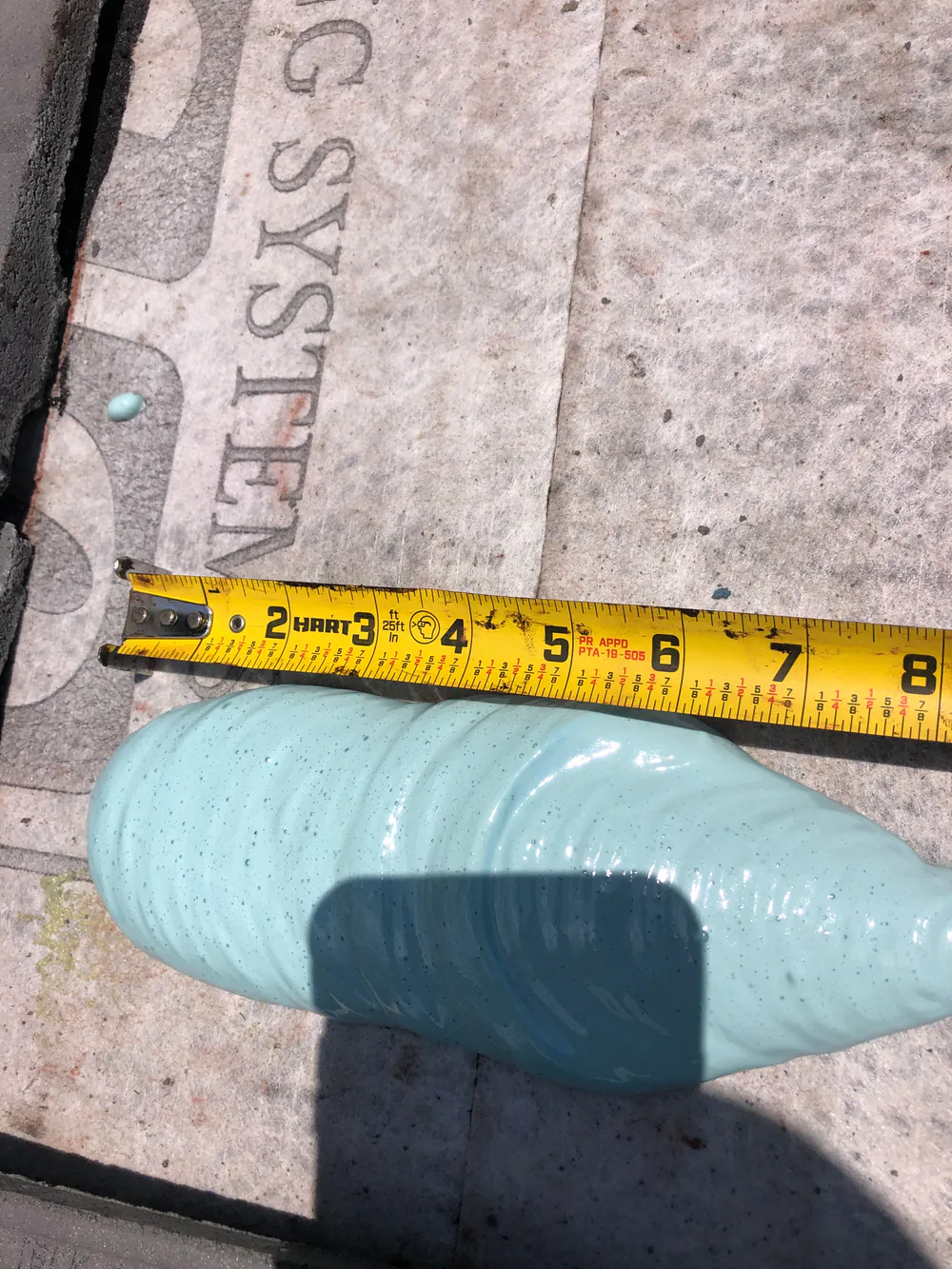
For budgeting, start with our Broward tile roof cost guide. If you are repairing a loose tile or leak, a roof inspection and repair assessment should identify the cause before more adhesive is added.
Documented M&M experience
AH-160 on two M&M tile roof projects
Our Parkland project record identifies Polyset AH-160 with Barcelona 900 tile. M&M confirms the installation used medium paddies measuring approximately 7 × 2 inches. The record does not identify the HFC/HFO formulation or paddy gram weight, so we do not assign the project a resistance value from the chart.
The Miramar townhouse record identifies AH-160 HFO with Villa 900 and a medium-paddy application. It does not distinguish HFO1 from HFO2 or provide paddy dimensions, weight, contact area or project wind calculations. These examples show our documented work; the charts remain tied to their specific approval details.
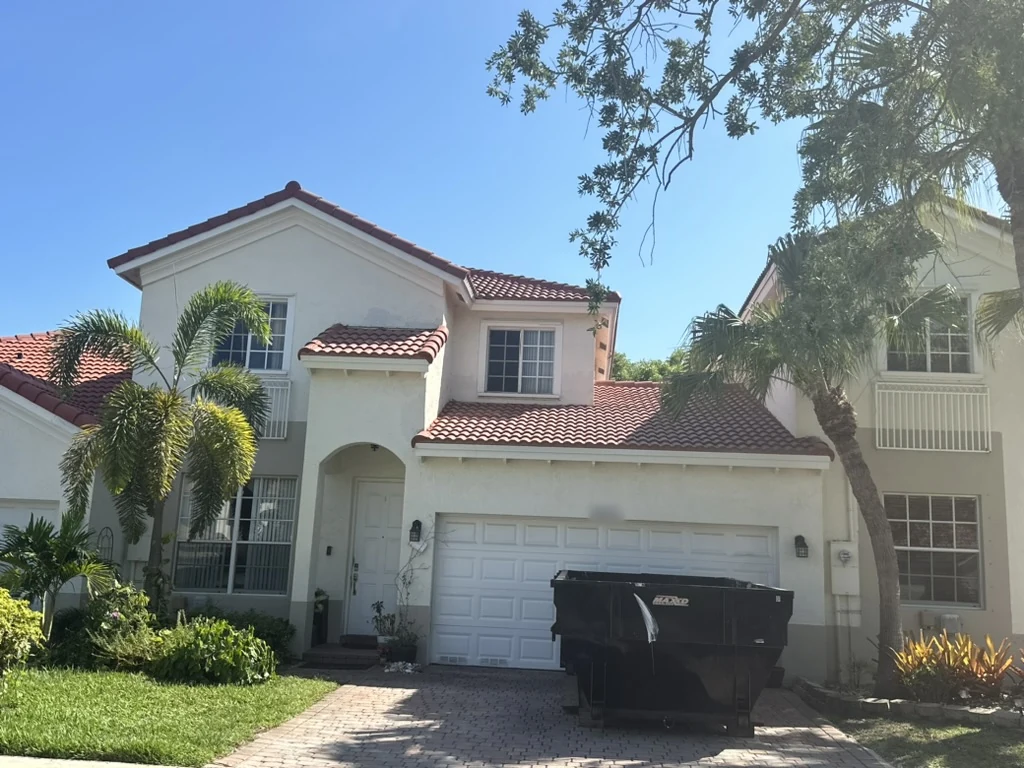
Real Miramar Townhouse Project
Villa 900 Concrete Tile Roof in Gold Dust Blend
See the direct-to-deck TU MAX underlayment, medium-paddy AH-160 adhesive application, finished tile, and shared-roof protection considerations documented for this attached townhouse.
View the Miramar Villa 900 case study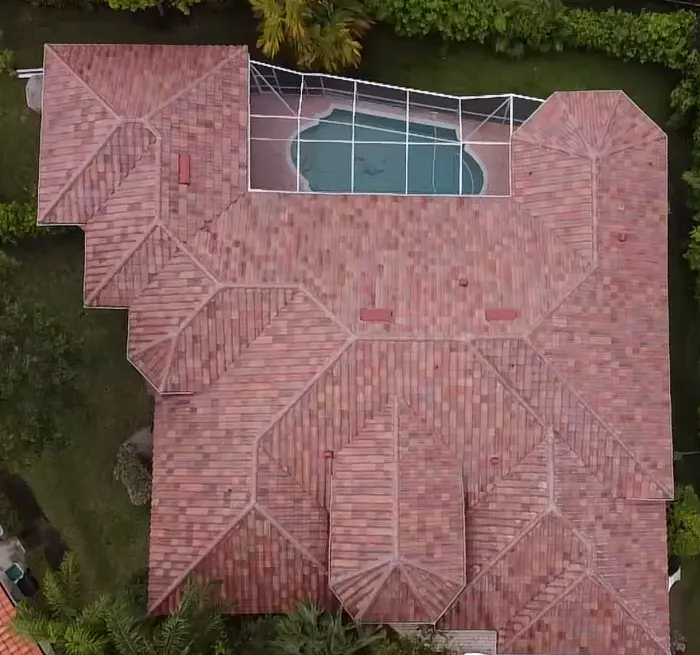
Real Parkland Project
Barcelona 900 Concrete Tile Roof Replacement
See the completed Avalon Beach Blend roof and the documented #30 felt, Polystick TU MAX, and Polyset AH-160 system details.
View the Parkland tile case studyExplore tile colors and profiles, our Saxony 900 review and more completed M&M roofs as you plan your project.
Frequently asked questions
Is AH-160 the same product as Polyset RTA-1?
No. AH-160 uses two components mixed during application; RTA-1 uses one component. Both carry the APOC Polyset name, but they have separate approvals and attachment details. Your estimate should name the exact product and formulation rather than just say APOC foam.
Is AH-160 stronger than the other tile foams?
The result changes with the tile and attachment detail. For Lake Wales Saxony 900 Slate, the listed single-paddy entries at 45 g are 119 ft-lbf for AH-160 HFC/HFO1 and 93 for StormBond 2. For Barcelona 900, the selected entries are 67 for AH-160 at 63 g and 82 for StormBond 2 at 60 g. The graph also shows RTA-1 and TILE BOND with their own foam amounts and patterns. Ask which detail meets your roof's requirements, rather than choosing a brand from one number.
Do the chart numbers tell me what wind speed my roof can handle?
No. Mf, measured in ft-lbf, describes the listed resistance to a tile lifting and rotating in a specific arrangement. It is not a wind-speed rating or a direct pull-off test of foam bonded to underlayment. Your roofer and designer must check the complete roof, including its edges and corners, against the wind requirements for your home.
Can AH-160 be used with Polystick TU MAX?
Polyglass NOA 25-0121.12 expressly lists AH-160 HFC with Polystick TU MAX. That table does not separately establish compatibility for HFO1 or HFO2. Have your roofer confirm the formulation actually supplied and the complete approved assembly, including how the underlayment is attached.
Can the installer swap AH-160 formulations or change the foam amount?
The formulation, amount, position and contact area must follow the applicable approvals. HFC/HFO1 and HFO2 entries are kept separate in the tile tables. Some published quantities or contact areas differ from the current component requirements, so those differences need to be resolved before installation. A chart entry is not a dispensing instruction, and adding foam does not establish a new strength value.
Does the AH-160 approval cover my whole roof?
NOA 23-0614.01 covers the adhesive component, with a stated expiration of May 10, 2027. Your exact tile and manufacturing plant also need the appropriate attachment entry, and the roof design and installation must satisfy the applicable requirements. Ask for the tile, underlayment, adhesive formulation and attachment detail in writing, with current approval documents checked for your project.
Is AH-160 stronger than screws, and will my roof still need fasteners?
Some AH-160 arrangements have a higher listed attachment value than a particular screw pattern, but that is not true for every tile or setup. An approved foam detail may reduce field-tile fasteners while other parts of the roof still require screws, clips or other attachment. The estimate should explain where each method will be used.
What do the foam paddies in M&M's photos show?
M&M confirms that the photographed paddies and the documented Parkland installation use medium paddies approximately 7 × 2 inches. The photos show the placement work, but those dimensions do not establish the foam's weight, HFC/HFO formulation, attachment value or approval compliance. Those details must come from the project records and approved installation plan.
Sources checked October 23, 2026
- APOC Polyset AH-160 · manufacturer product information (opens in a new tab)Two-component product identity and application systems. Manufacturer claims must be read with the specific component and tile approvals.
- AH-160 · component NOA 23-0614.01 (opens in a new tab)Approved September 19, 2024; stated expiration May 10, 2027. Separate HFC, HFO1 and HFO2 conditions, application minimums and installer requirements.
- RTA-1 · component NOA 25-1219.03 (opens in a new tab)Separate one-component HFO adhesive. Stated expiration January 3, 2027. Table 1 and drawings on pages 4–7 contain differences that need reconciliation with the tile-specific details.
- TILE BOND · component NOA 26-0306.01 (opens in a new tab)One-component TILE BOND / TILE BOND (HFO). Stated expiration August 23, 2031. Exact formulation and tile attachment detail must be confirmed.
- StormBond 2 · component NOA 22-0512.02 (opens in a new tab)Two-component product used in the graphs, separate from one-component StormBond. Stated expiration April 13, 2027; component approval permits tile-specific application details.
- Polystick TU MAX · Polyglass NOA 25-0121.12 (opens in a new tab)Page 18 expressly lists AH-160 HFC in the compatibility table. Do not extend this entry to HFO1 or HFO2 without confirmation. Stated expiration September 13, 2027.
- Westlake Saxony 900 Slate · tile NOA 24-1008.12 (opens in a new tab)Tile-specific source for the chart. Each bar identifies its formulation, foam quantity, page and table. County file status checked October 23, 2026.
- Crown Windsor Slate · tile NOA 25-0127.10 (opens in a new tab)Tile-specific source for the chart. Each bar identifies its formulation, foam quantity, page and table. County file status checked October 23, 2026.
- Westlake Villa 900 · tile NOA 26-0602.02 (opens in a new tab)Tile-specific source for the chart. Each bar identifies its formulation, foam quantity, page and table. County file status checked October 23, 2026.
- Crown Tuscany · tile NOA 25-0127.09 (opens in a new tab)Tile-specific source for the chart. Each bar identifies its formulation, foam quantity, page and table. County file status checked October 23, 2026.
- Westlake Barcelona 900 · tile NOA 24-1008.13 (opens in a new tab)Tile-specific source for the chart. Each bar identifies its formulation, foam quantity, page and table. County file status checked October 23, 2026.
- Crown Sanibel · tile NOA 24-1008.16 (opens in a new tab)Tile-specific source for the chart. Each bar identifies its formulation, foam quantity, page and table. County file status checked October 23, 2026.
- Verea Spanish S · Grade 1 · tile NOA 25-0206.03 (opens in a new tab)Tile-specific source for the chart. Each bar identifies its formulation, foam quantity, page and table. County file status checked October 23, 2026.
- Verea True Barrel · Grade 1 · tile NOA 22-1202.03 (opens in a new tab)Tile-specific source for the chart. Each bar identifies its formulation, foam quantity, page and table. County file status checked October 23, 2026.
Product approvals are revised and renewed. Confirm the current document for the exact product, plant and roof system when your permit is prepared. This guide is general information for homeowners, not an engineering or permit determination for a specific roof.
Get a tile roof estimate built around your home
Compare the complete scope, from wood repairs and waterproofing to the tile attachment and written coverage.
Call (754) 714-8445